Scientific discovery identifies possibilities. Formulation science explores how those possibilities can be translated into practical applications.
From possibility to application
01Scientific knowledge→
02Ingredient selection→
03Formulation design→
04Delivery considerations→
05Evidence→
06Practical application
Each decision changes the question the finished formulation must answer.
From science to formulation
An ingredient can begin the question.
Throughout Simply Carnosine, we have explored what carnosine is, why it naturally occurs in the body, why researchers are interested in its biological properties, and how scientific evidence should be interpreted with care.
That journey leads to an important next question:
How can scientific knowledge about an ingredient be translated into a practical topical formulation?
Identifying a biologically interesting compound does not automatically determine how it should be prepared, combined with other ingredients or delivered through a topical product. Those decisions belong to the field of formulation science.
A topical formulation brings together interconnected considerations: the characteristics of the active ingredient, compatibility with supporting ingredients, the delivery vehicle, stability, concentration, manufacturing consistency, packaging and intended method of application.
Each decision can affect the characteristics of the finished formulation. This is why two products containing the same headline ingredient should not automatically be regarded as equivalent.
Featured insight
The active ingredient is only part of the story.
A formulation is a complete system—not merely a list of ingredients.
The ingredient list tells uswhat is included.
Formulation science helps explainhow it has been incorporated and why the complete system was designed in that way.
The purpose of this chapter
Understand first. Examine later.
This chapter will explore how scientific principles can guide the development of a thoughtfully designed topical formulation—and how research, delivery science, patented innovation and clinical evidence occupy different, but connected, places within that process.
Its purpose is not to assume that a product is effective because it contains carnosine, or because aspects of its formulation have been patented. Only after establishing the scientific foundation will we examine a commercial example and consider what the available evidence supports.
Stage Two
Why formulation matters.
Before examining any particular formulation, it is helpful to understand the scientific and practical decisions involved in developing a topical gel.
The next section will explore what can distinguish a carefully designed formulation from the simple inclusion of an active ingredient.
Most people naturally focus on the active ingredient when comparing products.
While the active ingredient is important, formulation scientists must consider many other factors before a topical formulation can be developed. Every formulation represents scientific, engineering and manufacturing decisions working together as a complete system.
Anatomy of a formulation
The system around the ingredient.
Read from the centre outward. Each layer adds another set of decisions between an interesting ingredient and a practical finished formulation.
Packaging
Manufacturing
Delivery system
Supporting ingredients
Active ingredient
The starting pointPurpose
A formulation is considered as a connected whole—not as isolated layers.
Five connected questions
Every component has a purpose.
No single decision defines the formulation. Each one changes the context in which the others must be considered.
01
Active ingredient
Where does the scientific interest begin?
The active ingredient gives a formulation its central scientific rationale. Its identity, characteristics and intended concentration matter—but it remains only one component within the finished system.
02
Supporting ingredients
What surrounds the active ingredient?
Supporting ingredients may contribute structure, texture, preservation or other practical functions. Formulators must consider whether those ingredients are compatible and how they behave together.
03
Delivery system
How is the formulation presented to the skin?
A topical vehicle determines the physical setting in which ingredients are applied. Its design affects spread, contact and consistency of use. It does not, by itself, establish that an ingredient reaches a particular tissue.
04
Stability
Does the formulation remain what it was designed to be?
Stability work considers whether a formulation retains its integrity and consistency over its intended shelf life. Time, temperature, light, packaging and ingredient interactions can all be relevant.
05
Manufacturing quality
Can the design be reproduced consistently?
Research may identify a formulation worth investigating. Manufacturing controls help ensure that the finished product can be produced consistently, batch after batch, to defined specifications.
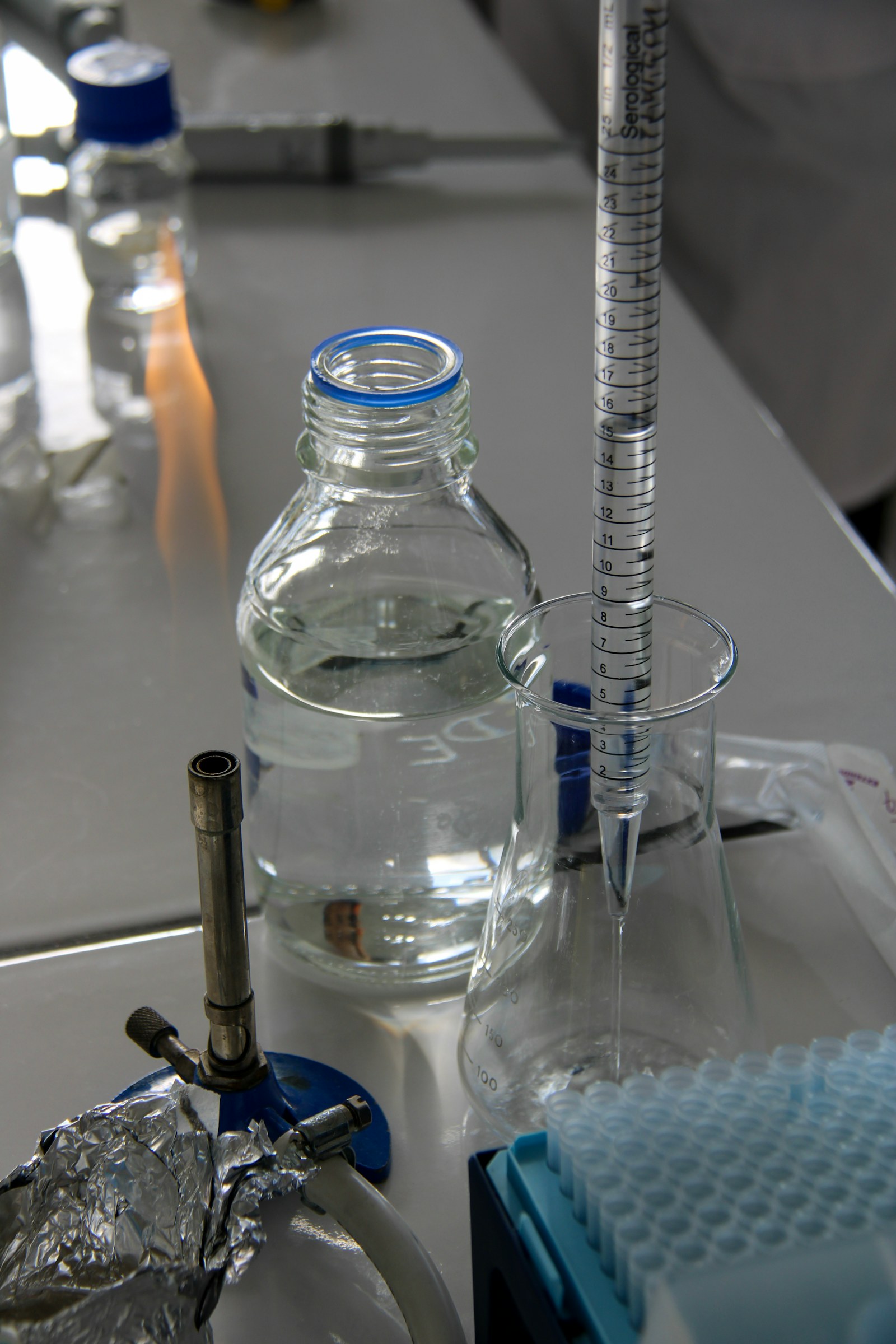
Laboratory glassware · illustrative of controlled formulation work, not a specific product or study
From design to consistency
A good idea must survive the bench.
A formulation exists first as a set of scientific choices. It becomes practical only when those choices can be brought together consistently.
Measurement, process order, temperature, mixing, filling and packaging may all influence the finished formulation. Quality systems do not prove an outcome, but they help preserve the identity and consistency of what has been designed.
The principle to keep
The label names the ingredients. The formulation connects them.
We can now see why the active ingredient is not the whole story. A topical formulation is a designed system shaped by compatibility, delivery, stability and manufacturing decisions.
Only with that foundation in place can the next part of the formulation story be examined carefully.
Understanding the parts of a formulation reveals a new question: how do scientists decide what those parts should become?
A formulation rarely emerges fully resolved. It develops through a sequence of questions, prototypes, observations and refinements—each one narrowing the distance between an interesting possibility and a practical design.
The change in pace
Innovation does not begin with an answer. It begins with a problem worth solving.
The problem may concern stability, compatibility, application, consistency or another design constraint. Formulation strategy turns that constraint into something that can be investigated.
A process of refinement
Think. Test. Learn. Repeat.
The sequence is rarely perfectly linear. A result may send the formulation back to an earlier question—and that return is part of the science.
01
Scientific reasoning
Define the question and the purpose the formulation is intended to serve.
↓
02
Formulation strategy
Choose a coherent approach to ingredients, vehicle, stability and practical use.
↓
03
Experimentation
Prepare, observe and measure prototypes under controlled conditions.
↓
04
Refinement
Learn from what changes, what remains stable and what fails to behave as intended.
↓
05
Innovation
Arrive at a distinct solution that may be documented, studied or protected.
●
Formulation development is iterative · illustrative laboratory photography, not a specific product process
What refinement looks like
Not every prototype is meant to succeed.
A prototype can be valuable even when it is not the final formulation.
It may reveal an incompatibility, an unexpected physical change or a practical limitation. Those observations help researchers revise the formulation strategy and decide what should be tested next.
Innovation is therefore not simply novelty. It is the result of informed problem-solving: identifying a constraint, developing a distinct response and refining that response until it can be described clearly enough to reproduce and evaluate.
Where patents enter the story
Innovation can be described and protected.
INVENTION→DOCUMENTATION→PROTECTION
A patent can describe and protect an invention—such as a particular formulation, process or use—when the relevant legal requirements are met.
That makes patents an important part of the innovation story. It does not make them the final word on what happens when a formulation is used.
The next question
If a patent protects the idea, what evaluates the outcome?
We have followed a formulation from scientific reasoning through experimentation, refinement and invention.
The next stage will separate the roles of innovation and evidence—and show how patents and clinical studies contribute different kinds of information.
Different questions require different forms of proof.
01
Patents
Can describe and protect an invention. They help us understand what is claimed as novel—not whether a meaningful outcome has been demonstrated.
02
Clinical studies
Can evaluate defined outcomes under defined conditions. Their conclusions belong to the formulation, population and methods that were actually studied.
A real-world example
What might these principles look like when brought together?
LactiGo offers one commercially available example through which the formulation ideas explored in this chapter can be considered in practice.
It is introduced here as an example—not as proof that every proposed mechanism or product claim has been established.
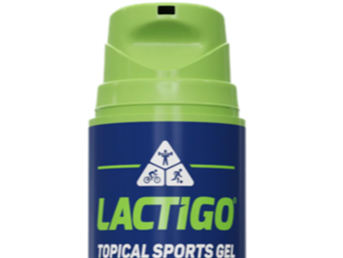
ONE EXAMPLECommercially available topical gel · 100 mL pump bottle shown
What can be stated directly
LACTIGO®
A finished formulation with a defined ingredient system.
The official LactiGo information describes topical gel formulations containing L-carnosine and magnesium sulfate, with menthol included in one version. Supporting ingredients listed for the current US menthol formulation include ethoxydiglycol, glycerine, phenoxyethanol, water and xanthan gum.
Formulations may differ by territory. The product label for the version available to a reader remains the appropriate source for its exact ingredients and directions.
01
Ingredient selection
Carnosine sits within a wider formulation rather than appearing alone.
02
Supporting system
The complete ingredient list reflects decisions about vehicle, structure and preservation.
03
Commercial application
The scientific idea has been translated into a manufactured topical gel with labelled directions and packaging.
04
Evidence boundary
The presence of an ingredient, a patent or commercial availability does not replace formulation-specific outcome evidence.
Transparent sourcing
Product identity and formulation details were checked against LactiGo’s official information and the current US DailyMed label. Simply Carnosine has deliberately not reproduced promotional performance or recovery claims.
Simply Carnosine is an independent educational resource. It is not owned or operated by LactiGo or its manufacturer, and LactiGo is presented here as a relevant real-world formulation example.
01
Independent ownership
Simply Carnosine is not endorsed by or presented as an official website of LactiGo or its manufacturer. They do not own, operate or exercise editorial control over this resource.
02
Affiliate disclosure
If you purchase LactiGo through certain links on this website, Simply Carnosine may receive an affiliate commission at no additional cost to you.
03
Editorial independence
Affiliate relationships do not determine the educational content, scientific evidence selected or editorial conclusions presented. Readers are encouraged to review the available information and make their own informed decisions.
You have followed carnosine from molecule to scientific question, from formulation decisions to innovation, and from innovation to a real-world example.
The next step is not a purchase. It is the same step that has guided this entire website: keep asking what the evidence shows, what it does not show, and which formulation was actually studied.